A Case of Self-Defense
Though the county had seen its share of crime in the past, the brutal murder of Fallsburg resident Lafayette Taylor in 1903 was described by one newspaper reporter as “the most horrible crime ever committed in Sullivan County.” The manner of death – and the subsequent conviction of his wife for the crime – captured the attention of the Hudson Valley and, for a period of time, made minor celebrities of all those involved in the gruesome case.
Around the turn of the century, Kate and Lafayette Taylor, along with Kate’s daughter from a previous marriage, Ida May DeKay, moved from Wawarsing in Ulster County to the Sullivan hamlet of Centerville (today known as Woodridge). Though their property was remotely located and they had few neighbors, word of the couple’s troubles spread quickly. Taylor had difficulty holding down a job and was known for his hard drinking, and both Kate and Lafayette Taylor had accused each other of physical abuse at various times.
In February of 1903, Lafayette was reported missing after having failed to show up for a scheduled job. Kate Taylor told neighbors that he had traveled to Orange County to look for work and a new home for the family. One of Lafayette’s family members contacted the authorities, who quickly extracted a confession from Kate. She admitted to killing her husband on the night of January 26, purportedly in self-defense. The murder came as little surprise to those who knew the couple, but as details of the crime came to light, Sullivan County residents were stunned by the extent of the savagery that had taken place on the Taylor farm.
When questioned, Kate Taylor explained that her husband had come home drunk on the night of the 26th and began beating her. Fearing for her life and that of her daughter, she grabbed the revolver that she had recently purchased and threatened him with it. She said that they struggled for the gun before it went off twice, killing Lafayette.
When she realized that her husband was dead, Kate panicked and attempted to cover her tracks. Over the course of the next week, she used an axe to cut up the body and burned the pieces in her kitchen stove. She covered the bullet holes in the wall with wallpaper and fresh paint and burned Lafayette’s clothes. Once his body had been reduced to bones and ash, she ground some of the bones and mixed them in meal for her chickens. Kate Taylor was described as calm while confessing her actions to the authorities, saying that she felt “haunted” by her crimes.
Taylor was brought to the jail in Monticello, where a hearing was held to determine her guilt. She claimed that the crime had been committed in self-defense and that she had only purchased the revolver because bears and other wild animals had been frequenting the area. District Attorney F. S. Anderson dismissed her claims and focused instead on the one witness to the crime: Ida May DeKay.
Authorities soon learned that fourteen-year-old Ida May helped her mother dispose of her step-father’s body. She told the District Attorney that on the night of the murder she had been asleep when Lafayette Taylor came home but woke to the sounds of the shots. She witnessed her mother using an axe to chop Taylor’s head and right arm off, and then helped her to place them in the kitchen stove, where they burned through the night. The rest of the body was cut into several pieces in the family’s washtub and placed in a bag in the pantry. DeKay also recounted going back to bed after helping with the grisly task and using the kitchen stove in the morning to make pancakes for herself.
Doubting the girl’s story at first, authorities first searched a swamp on the property, and later broke through the ice on nearby East Lake in order to have it dragged, but did not discover evidence of Taylor’s body. With Ida May’s help, police eventually located bones thought to be Taylor’s body in an ash heap and hidden in a manure pile, and discovered the bullet holes in the wall, clumsily hidden behind a fresh coat of paint.
Friends emerged on both sides with tales of the troubles in the Taylor household. Kate’s friends recounted how Lafayette would drink heavily and would often knock her to the ground in anger, while his friends claimed that he had many scars from times Kate had hit him with axe handles and other weapons. They also claimed that she had tried to kill him before, by setting fire to a barn where he was sleeping and barring the door to hinder his escape. Taylor’s friends also suggested that Kate Taylor had an intimate relationship with Peter Yerkins, her half-uncle. This was further supported by Ida May, who told authorities that she had overheard her mother making plans with Yerkins to move into his Ulster Heights home once she had murdered her husband. Ida May swore that after her mother had killed Taylor, Kate went to the doorway of the cabin and swung a lantern around as if signaling someone in the distance.
Authorities questioned Yerkins, who admitted that Kate had told him about the crime and that she had burned her husband’s body in the stove. He was quickly arrested as an accomplice to the murder. Local newspapers reported that the time in jail terrified him and he wept most days, while the confinement “seemed to agree” with Kate Taylor.
Part II – The Trial
The case of the People vs. Kate Taylor went to trial in May of 1903, and proved to be quite sensational. Reporters described Taylor as standing five foot eight inches tall and about one hundred and fifty pounds, with “flashing eyes” and “defiant bearing” that made the men of the jury “shudder.” Fifty-two potential jurors were questioned for nearly seven hours before eight men were chosen. The District Attorney asked each of the men if they would be influenced by the fact that the accused was a woman and if they were opposed to a sentence of death if a guilty verdict were found. (It was noted in one local paper that the law-abiding “farm men” of Sullivan County would agree with the death sentence if they felt it was warranted, regardless of the accused’s gender.)
At trial, it was brought to light that in addition to setting a barn on fire in an attempt to injure her husband, Kate Taylor had also tried chloroforming him at one point. The District Attorney structured his case on the premeditation of the crime: namely, the purchase of the revolver and Ida’s testimony that her parents were calmly drinking tea together before she went to bed, not engaged in a physical struggle. He noted that following the murder, Kate Taylor not only disposed of the body, but also took great pains to cover up her crime by painting the walls, scrubbing the floors clean of blood and burning the washtub where she had cut up what remained of Taylor’s body. The charred remnants of Lafayette’s bones were produced for the jury and caused great excitement among the spectators who gathered in the courtroom each day. Kate added to the drama whenever she took the stand, for she “gesticulated wildly” and often broke down in tears when speaking of her daughter; many of the women in the courtroom found themselves in tears upon hearing Kate’s version of the events.
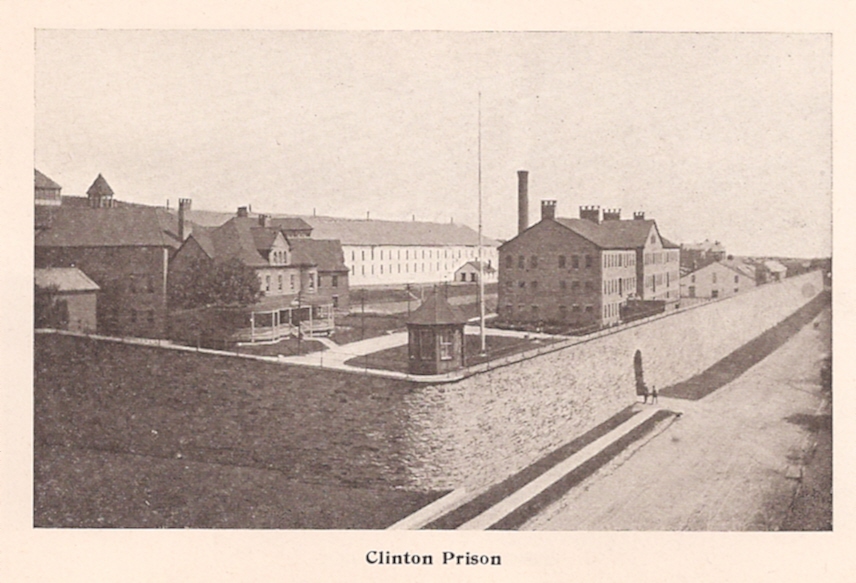
Kate Taylor was found guilty of murder in the first degree and sentenced to die by means of the electric chair during the week of July 5. She was sent to the Clinton Prison at Dannemora, where she won a stay of execution just days before her sentence was to be carried out. Upon appeal, her lawyers claimed that she had acted out of fright and that parts of Ida May’s testimony had been coerced. Kate Taylor claimed that authorities had paid Ida May five dollars to testify against her mother and had threatened the young girl with jail if she did not help the police. The lawyers also pointed out that more than 30 character witnesses were denied the right to speak on Mrs. Taylor’s behalf.
Nearly a year after her first trial, Kate Taylor was once again in the Sullivan County Courthouse. This time, more than 200 potential jurors were brought forth in an effort to find eight men who had not already made up their minds about the case. Kate’s lawyers argued that since Ida May had been sent to live with Lafayette Taylor’s family when her mother was first arrested, she had been unduly influenced and would not be a credible witness; nevertheless, the girl’s testimony was once again the focus of the trial.
Based on evidence that Lafayette Taylor had threatened and assaulted his wife in the past, as well as some changes to Ida May’s recall of the events, the new jury took self-defense into account. (Monticello’s Republican Watchman newspaper reported that “Taylor was addicted to drink and when intoxicated took a fiendish joy in beating and annoying his hard-working wife.”) This time around, Kate Taylor was found guilty of murder in the second degree. The jury also found no evidence that Peter Yerkins had either helped plan or carry out the murder. Justice D-Cady Herrick sentenced Kate Taylor to life in the Auburn prison “for the remainder of her natural life” and ordered Yerkins released from prison.
In the days before she left Sullivan County, Taylor was visited by dozens in her cell. Most visitors brought her gifts and flowers, including three local teachers who picked her favorite wildflowers from the Taylor property for her. She showed off her needlework and was offered large sums of money for pieces that she had embroidered while in prison at Dannemora. A large send-off was provided by her friends and supporters and on June 2, in the custody of Sullivan County Sheriff Royce, Kate Taylor made her way to Auburn. Crowds gathered at every train station along the route, hoping to catch a glimpse of the famed murderess.
Auburn proved harsh for Taylor and she rapidly declined both physically and mentally. In July of 1907, Kate Taylor was moved to the Matteawan State Asylum for the Criminally Insane in Dutchess County. She died of consumption there on November 22, 1907, at the age of forty-four. She was brought back to Sullivan County and buried in the Woodbourne Cemetery, not far from the place where she had grown up.
Though she passed away shortly after being sentenced, Kate Taylor remained an object of fascination for many. Souvenir hunters flocked to the Taylor property, where they carried away anything they could find, including pieces of the house itself. Reflecting on the second trial once it had ended, Judge D. Cady Herrick was asked why so many people, women in particular, had been drawn to Kate Taylor’s story. According to an account in the Ohio Law Bulletin, the judge (who would run unsuccessfully for governor of New York shortly after the trial ended) replied to the question by recounting a story about a former Confederate soldier who gave money to a Union veteran who was missing limbs and was forced to beg for a living. The Confederate soldier replied that the man was the first Yankee he’d seen “trimmed to his taste.” Judge Herrick likened the story to Taylor, saying that was “the reason why so many women came to see this unfortunate woman tried for her life. They want to get a good look at a woman who had the nerve to ‘trim’ her husband the way they would like to see theirs trimmed.”



 Bygone Hudson Valley
Leave a comment