(Originally published 2014 as part of the “History and Heritage: The Hudson Valley and Its Hinterlands” blog)
Throughout the 1880s, Ulster County’s Town of Rochester was featured in the news for several strange items. From a prospector claiming mineral rights to the entirety of the Rondout Creek, to diamonds found in the Shawangunk Mountains, from a record setting forty-five year old stallion to an ancient sword falling from the sky in a flash of fire, Rochester made headlines time and again…and at the heart of each of these stories was one Daniel D. Bell of the Rochester hamlet of Accord.
Bell was born around 1834 in Ulster County, and lived in the Town of Rochester for most of his life. By the time he was in his forties, his name was well-known around the county primarily for his various legal entanglements and creative attempts to make money. Bell’s neighbors, many of them relatives, often backed his claims and local newspapers began referring to him as “the famous Daniel D. Bell.” Bell gained some notoriety as a farmer; in 1878 Scientific American ran a short piece on him. His claim to fame was owning a stallion by the name of Gumbo that lived to the age of 45, one of the oldest horses on record at the time. Neighbors claimed that Gumbo’s longevity was due to Bell’s talent for caring for livestock.
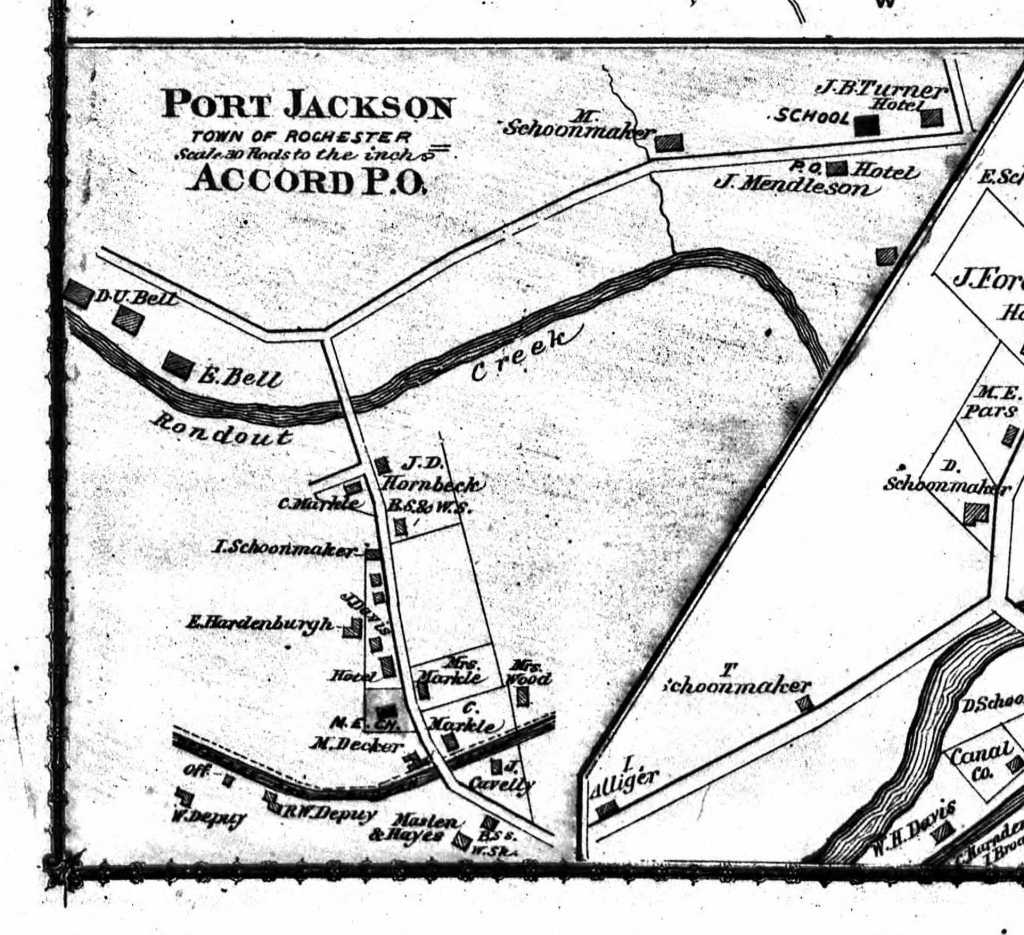
While farming earned Bell some recognition, it did not provide a great deal of wealth, and so he turned to other ventures in an effort to make a profit. One of those outlets was mining. Bell made numerous assertions that he had discovered mineral veins and precious stones in the Shawangunk Mountains, and soon had claims staked throughout the Hudson Valley and the Catskills. He did discover various “surface finds,” but when asked to provide proof that riches could be found by mining, he refused on the grounds that others would try to steal from him if they knew where his mines were located. When others, including reporters, began expressing disbelief that his mineral claims were generating any profit, Bell brought forth a stone unlike anything else that had been seen in Ulster County to that point.
In 1881, Bell produced a nearly two-ounce diamond that he showed to his closest friends. He claimed that it had been found on one of his properties in the mountains, but refused to provide more specific information. A second diamond followed shortly after, and again Bell refused to share much about its origins, other than claiming that it had come from one of his stakes. His critics indicated that he must have borrowed the stones from a wealthy friend, but none were able to determine who that generous friend might be.
In a particularly bold move, Bell filed a claim during that same time frame to the entire length of the Rondout Creek to the Hudson River and to a half-mile right away along the banks on each side. The claim was filed in Albany with the office of the Secretary of State of the State of New York and included the exclusive right of ownership “as the discoverer of gold, silver, copper, zinc, molybdenum and other precious metals” that might be found in the Rondout Creek or along its banks. To aid in the collection of any such materials that might be washed downstream, Bell had a straining boom constructed in one area of the creek. He followed this by filing another claim to all lands “in and adjacent to the Genesee River and valley in the State of New York as the said river flows from the northern part of Pennsylvania, northeast through Livingston and Monroe Counties into Lake Ontario.” As with the Rondout Creek, Bell claimed the right to any precious metals and minerals in the water body and for a half-mile right away on its banks. Bell achieved a great deal of attention for these actions, but still found very little reward in the way of the metals and minerals he had hoped to find.
Perhaps the most bizarre move, however, came in the spring of 1883, when he tried to capitalize on a natural phenomenon that occurred in Ulster County. Late one April evening, respected physician T. O. Keator was returning from a call in Accord. As he rode his horse near the Rondout Creek, he observed what he described as a fiery object falling from the sky. According to Keator, it was as large as a wagon wheel and reminiscent of a ball of fire. He observed it falling into the Rondout, producing steam and a great deal of noise. His horse was spooked by the event, so Keator could not get close enough to the creek to determine what had fallen in with such fanfare. The next day he returned to the area and told the story to Bell, who owned the farm closest to where the object had fallen – and who had rights to the creek. The two men searched the creek banks, but found no evidence of the object.
Two weeks later, a discovery was made. Bell’s sixteen year old son Rauly and a friend were wading in the creek when they discovered an old sword, in approximately the same spot that Dr. Keator had indicated the ball of fire had dropped. The weapon was twisted and rusty, nearly six foot in length, and weighed close to 20 pounds. Daniel and Rauly brought the sword to an appraiser in Kingston for examination. An article in the New York Times described the find, the lower half of which was “covered with strange and puzzling hieroglyphics.” The Times went on to explain that some Ulster County residents “agree that it came down from some far-off planet, warped by the heat from its rapid journey through space and rusted by its short rest on the river bottom.” Other theories were that it had belonged to an ancient race of giants who had once lived in the region. The theories abounded, with newspapers as far away as Europe carrying the story of Ulster County’s mysterious sword from the sky. Bell received several monetary offers for his newfound treasure, including the offer of one nearby farm in trade for the oddity, but refused them all.
His fame was short-lived, however, as the Times sent their own appraiser to examine the sword. That appraiser quickly pronounced it a scam, for he found the sword to be recently forged of poor quality iron and the “hieroglyphics” nothing more that scratches made by a compass. The reporter who carried that story noted that the weapon was so poorly made that it resembled an ancient battle sword “only in having a blade and hilt.”
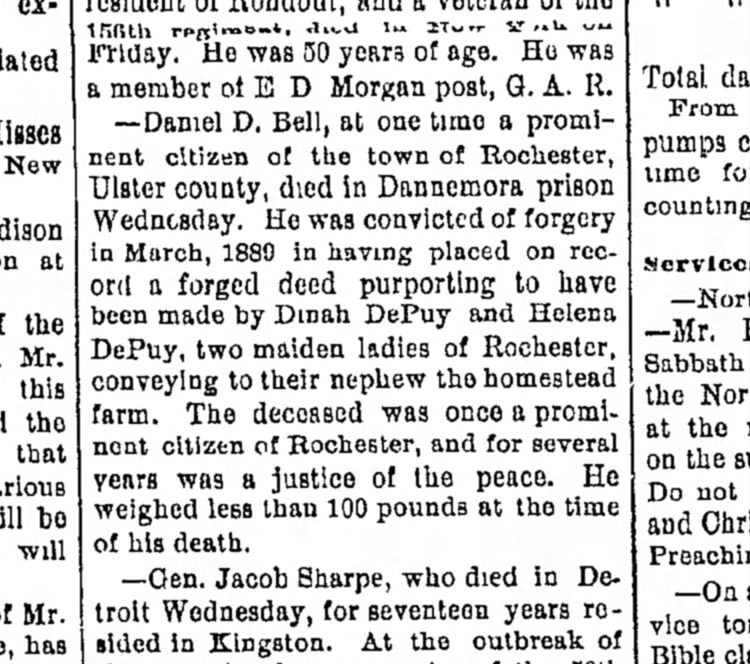
Bell continued to try his luck at similar ventures, but his quest for easy money eventually caught up with him. In 1888, he was tried and convicted of forgery, after counterfeiting a deed for property in Accord. He was sentenced to twelve and a half years in the Clinton Prison at Dannemora, and died at Dannemora in 1892, less than halfway through his sentence.
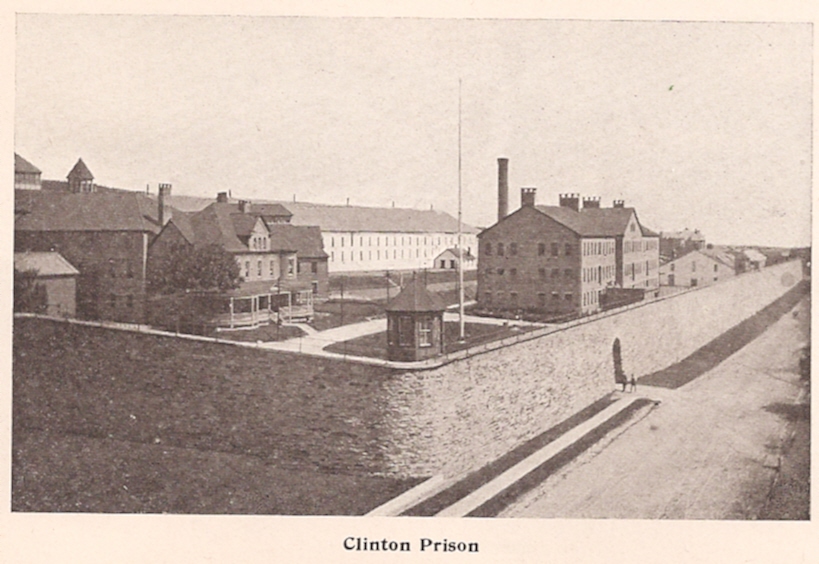
(Author’s Collection)


Leave a Reply