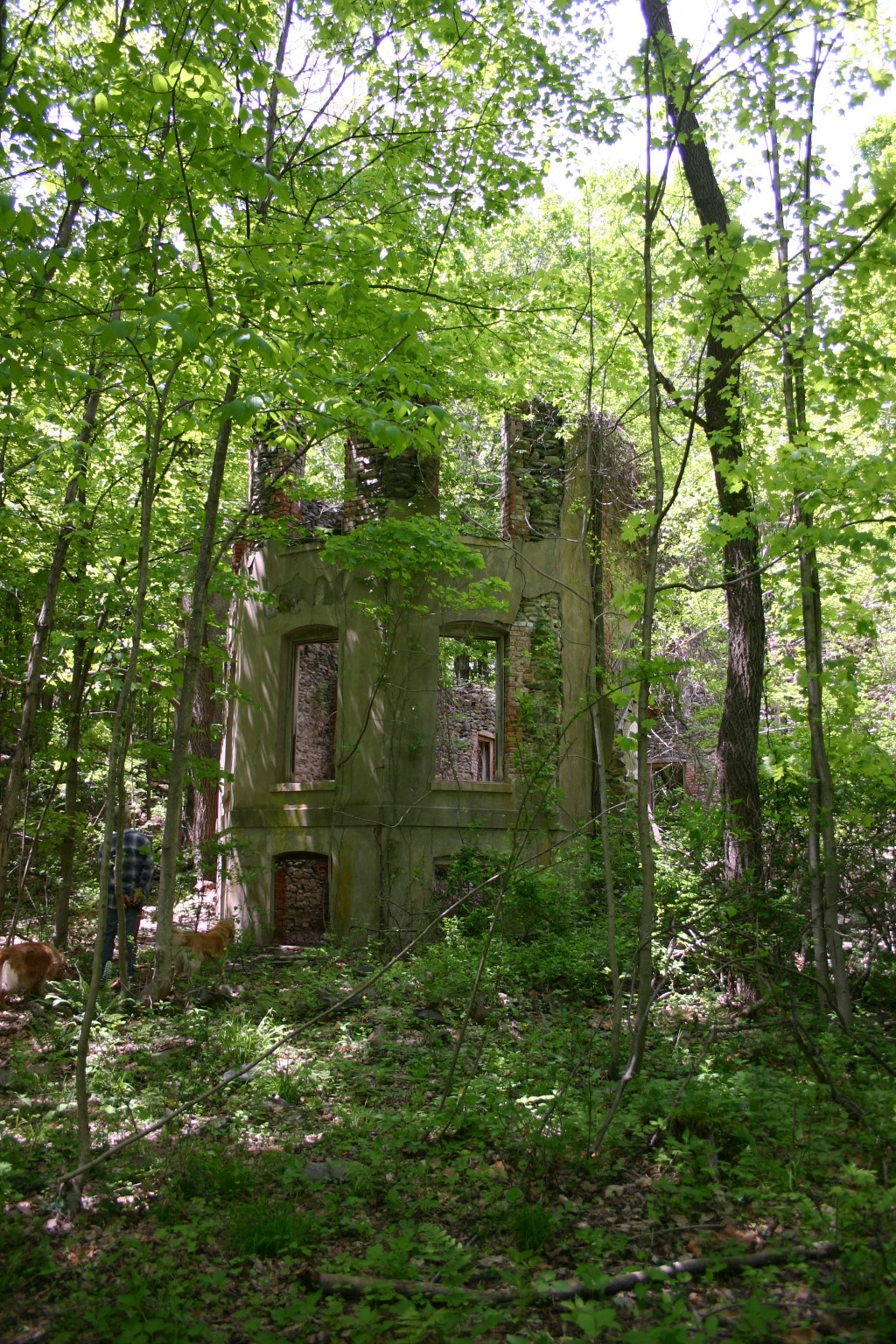
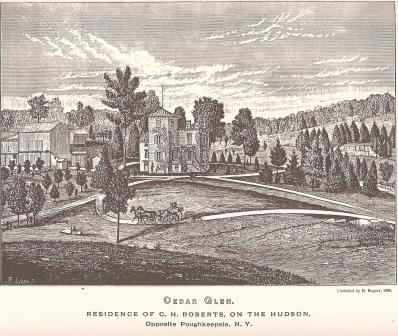
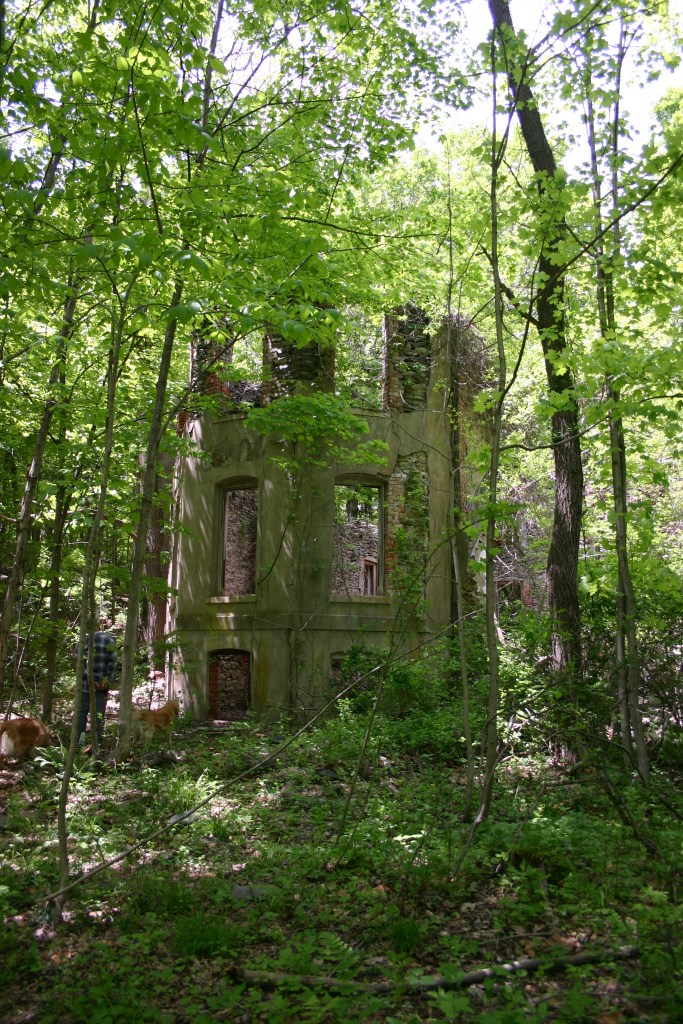
The hills above the Hudson River are dotted with expansive estates, many well over a century old, testaments to those who made their fortunes made in railroads, inventions, politics and other pursuits, as well as the architects and landscape designers who brought their visions to life. Even more estates have disappeared forever, torn down or greatly modified, with only suggestions of their past glory remaining. One such estate is Cedar Glen in the town of Lloyd, where what is left of a once-thriving family compound overlooking the Hudson River now stands in ruin. In the late 1800s, the property of Dr. Charles H. Roberts, a noted Poughkeepsie dentist, included two castle-like mansions as well as servants’ quarters, a greenhouse, a windmill and a dance hall. Today, only remnants of Cedar Glen remain, providing a dramatic backdrop for hikers in Scenic Hudson’s Franny Reese State Park.
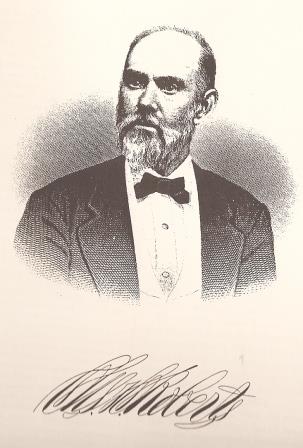
Charles Roberts was born in 1821 on a farm north of Albany. He had limited means but was able to support himself from a young age. He put himself through college by taking on various teaching jobs and eventually entered Albany Medical College. Though he had to borrow money at times in order to complete his course of study, Roberts took care to repay all of his debts on schedule, a practice that he would continue throughout his life.
Upon completing his medical training, he settled on the practice of dentistry. As a dentist, Roberts concentrated on chemistry and surgery, and quickly earned a reputation as a leader in his field. He practiced in Philadelphia initially before settling in Dutchess County, where he began a successful practice in Poughkeepsie.
By 1848, Roberts had developed a formula designed to numb the nerves by essentially killing off the nerve endings. The combination of arsenic and other chemicals, including morphine, led to a technique commonly known as “painless dentistry.” While continuing to focus on designs related to his practice, including natural looking false teeth and bridges, Roberts also quietly invested in lands in the Midwest and in railroad securities, both of which turned a hefty profit for him. He also manufactured paper and gloves, and dabbled in agriculture.
Roberts married Catherine Freeman of Poughkeepsie in 1866. Two years later, he had a mansion constructed on the banks high above the Hudson River in the town of Lloyd hamlet known as Oakes. Together they raised six children on the property they called Cedar Glen. As he grew older, Roberts retired from dentistry and turned his attention to investments and numerous hobbies, including farming. He had a larger mansion built around 1880; the smaller mansion was then used as an inn for a period of time. Cedar Glen eventually grew to more than 250 acres, with a number of homes and outbuildings. Daughter Grace Roberts lived on an adjacent 60-acre estate where she ran a dairy farm that became a model for sanitary practices.
As Roberts aged, reports of his eccentricity surfaced and some of his children initiated legal proceedings to take over his financial holdings. The case was dismissed when the judge determined that Roberts had a very clear sense of his financial matters. Charles Roberts died in February of 1909, at the age of 89, and almost immediately his descendants began fighting for control of the estate. His last will and testament, written just a month before his death, indicated that his property (valued at approximately $1.5 million) should be divided equally among his widow and children. Earlier wills and codicils soon turned up, however, including one hidden in a safe deposit box in New York City. In some of those documents, money was bequeathed to other relatives living in the West. The earlier wills also dictated that money be deducted from the inheritances of those children who had borrowed money from him without properly repaying him. In addition, Roberts added an interest charge of 4 percent. (Five of his children had signed a document in 1908 which agreed that any money owed to their father would be deducted from their share of the estate, but interest was not specified.)
Another issue with the estate was the fact that Roberts had purchased the property on which Grace ran her dairy farm but had never placed it in her name. As a result, that property became part of his estate upon his death, therefore jeopardizing the business Grace had established. (Grace eventually received the title to her land in 1913.)
The legal wranglings dragged out for years, with additional disputes between oldest daughter Frances and her mother, who both continued living on the property. When Frances hired additional servants, Catherine had her sons physically remove the men from the property, resulting in charges of assault and battery against some of the Roberts children. The Roberts family remained the subject of newspaper articles for many years. Eventually the siblings reached consensus by agreeing to split the legal fees in order to ensure that all siblings paid back what they owed the estate – an arrangement that the local newspapers referred to as “settling the estate by agreeing to disagree.”
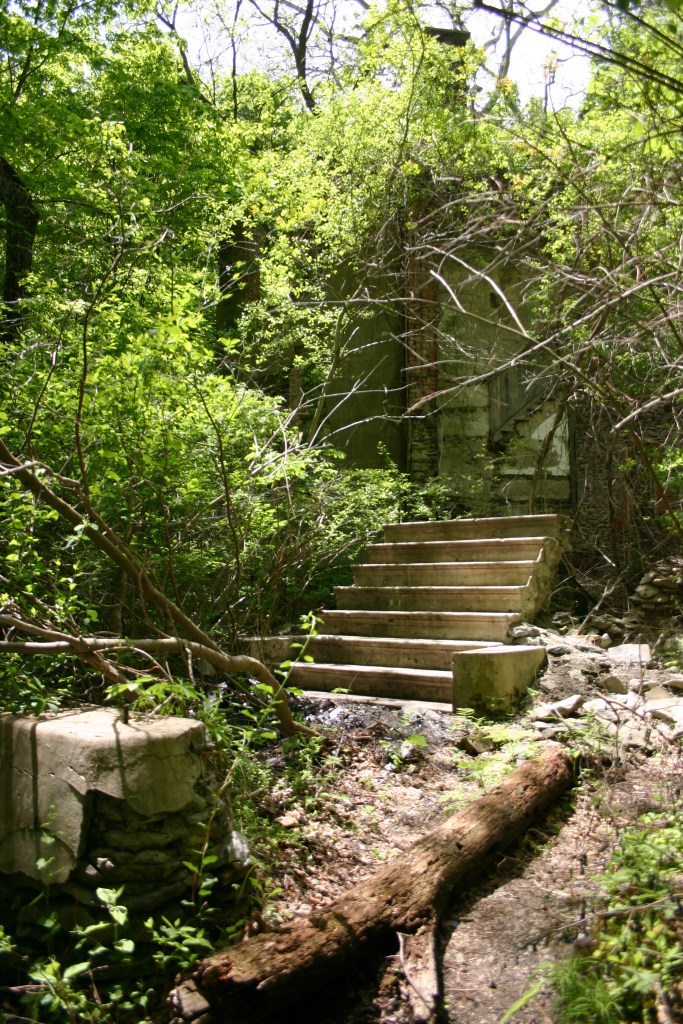
As time went by and the legal proceedings continued, the estate began to fall into disrepair. After a series of lawsuits and settlements, Frances was able to purchase much of the Cedar Glen property by 1914, but was unable to provide the funds needed for its upkeep. In addition, the start of construction of the Mid Hudson Bridge in the mid-1920s effectively cut off access to the estate and so the buildings began to fall into ruin.
Grace became responsible for the property following Frances’s death in 1946, but given her own financial troubles and health concerns, Cedar Glen was essentially abandoned for the next quarter of a century. Subsequent owners left the ruins of the mansion and outbuildings in place.
In 2003, the property was purchased by Scenic Hudson in an effort to save it from development. It was renamed in honor of environmentalist Frances “Franny” Reese, who was instrumental in spearheading the successful fight to keep a power plant from being constructed on Storm King Mountain and was a longtime Scenic Hudson board chair (1966-1984). In 2007, ownership of the property was transferred to the New York State Office of Parks, Recreation and Historic Preservation, allowing it to become a state park in 2009, complete with regular upkeep, designated hiking trails and interpretive signage. Scenic Hudson continues to oversee management of the park to this day.
Crossing Mid-Hudson Bridge from east to west, take Route 9W north and take first right onto Haviland Road. Parking area for Johnson-Iorio Park is located at the end of Haviland Road. From parking area, descend stairs and turn right to cross under Mid-Hudson Bridge. Trailhead is on the right. Or from west side of Mid-Hudson Bridge, take Route 9W south for 0.8 mile, then turn left on Macks Lane. Park entrance is 0.3 mile on the left.
Additional Information:
Franny Reese State Park/Scenic Hudson: http://www.scenichudson.org/parks/frannyreese
Franny Reese State Park. NYS Office of Parks, Recreation & Historic Preservation. https://parks.ny.gov/parks/192/details.aspx
“Grace Roberts” by Bill Kleppel: https://poklib.org/grace-roberts/
“The Rise and Fall of Cedar Glen: Ruins in the Reese Preserve” by Ethan P. Jackman: https://abouttown.us/articles/the-rise-and-fall-of-cedar-glen/


 Bygone Hudson Valley
Leave a comment