https://johnburroughsassociation.org/visit
“I was offered a tract of land, barely a mile from my home, that contained a secluded nook and a few acres of level, fertile land, shut off from the vain, and noisy world of railroads, steamboats, and yachts by a wooded, precipitous mountain, I quickly closed the bargain, and built me a rustic house there, which I called “Slabsides” because its outer walls are covered with slabs I might have given it a prettier name, but not one more fit, of more in keeping with the mood that brought me thither … Life has a different flavor here. It is reduced to simpler terms; its complex equations all disappear.”
John Burroughs, from “Wildlife About My Cabin”
For well over a century, a secluded cabin in the woods of Esopus has welcomed guests wishing to immerse themselves in the natural world. Once a retreat belonging to naturalist and renowned essayist John Burroughs, the simple home known as Slabsides is still open to the public twice a year, courtesy of the John Burroughs Association.
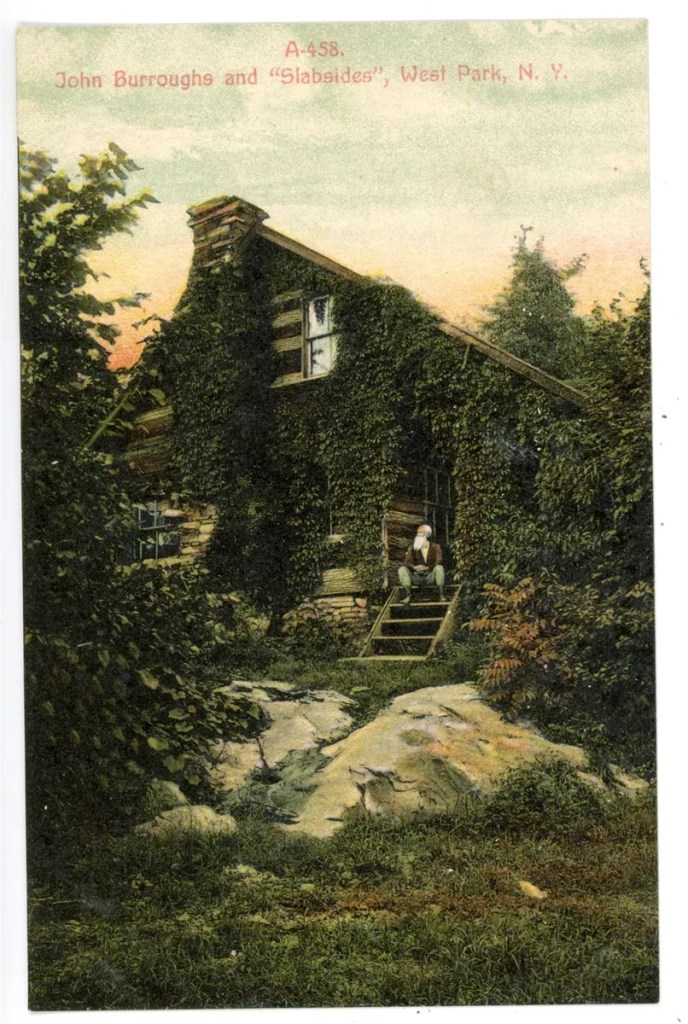
Burroughs lived for many years in the Esopus hamlet of West Park on a nine-acre Hudson River fruit farm he called Riverby. At Riverby he cultivated a variety of crops including grapes, which became a primary source of income. Around 1894 he acquired a wooded tract of land about a mile and a half away. With the help of his son Julian, Burroughs drained the swampy land and cleared an area for a small home. By the following year he had constructed a one and a half story cabin that he sided with chestnut and hemlock. At Slabsides, as it came to be known, Burroughs wrote some of his best-known essays.
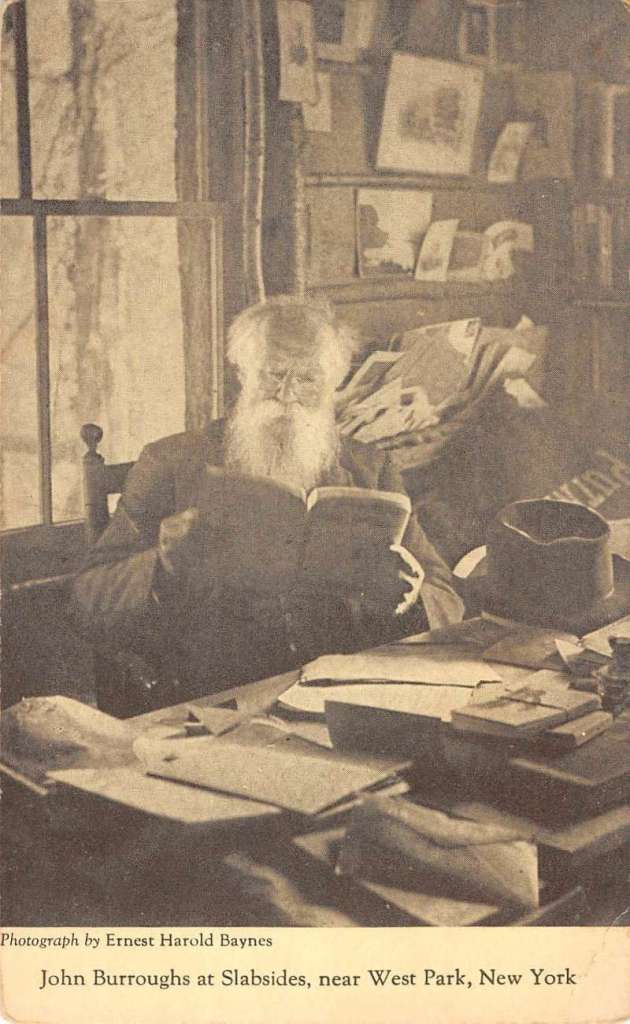
Burroughs made many of the furnishings for Slabsides, including his writing table and two beds. Though he spent a great deal of time alone there, either writing or exploring the woods and the Black Creek that ran through the property, Burroughs was equally devoted to sharing the natural world – and Slabsides – with his many friends.
By 1896, Burroughs was welcoming well-known guests to the cabin, including John Muir, Henry Ford and Walt Whitman, as well as hundreds of young women from Vassar College who would hike through the woods from the West Park train station to meet him. He would often write in the morning and greet visitors in the afternoons. The John Burroughs Association notes that Burroughs’ guest book eventually contained more than 7,000 signatures.
In the summer of 1906, President Theodore Roosevelt and First Lady Edith Roosevelt paid a visit to Slabsides, having arrived on the Hudson via the Presidential yacht and then hiking the trail to the cabin. According to Dorothy Unruh Bloodgood’s booklet, “A Post Card Portrait with Memorabilia of John Burroughs, Literary Naturalist,” Burroughs prepared a meal for them consisting of “broiled chicken (cooked over the fire), potatoes and onions (baked in the ashes of the fire) and peas (cooked on the little kerosene stove) and lettuce and celery picked fresh from the garden.”
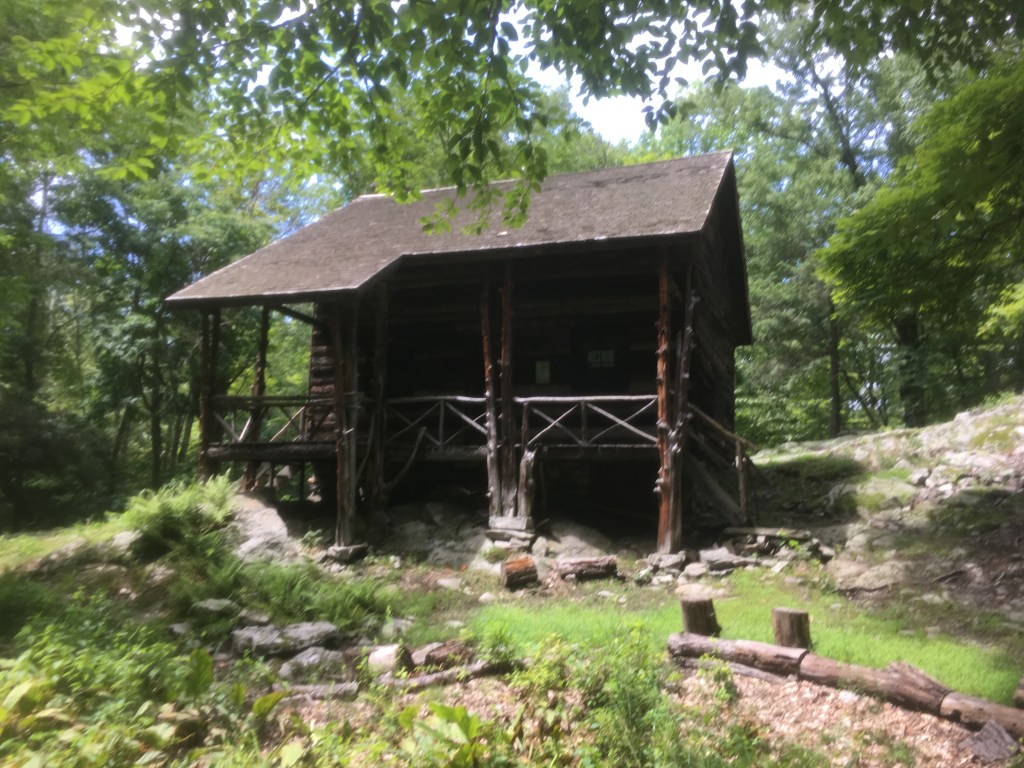
Following Burroughs’ death in 1921, Julian Burroughs turned Slabsides over to his father’s friends Henry and Clara Ford, who presented the cabin to the newly formed John Burroughs Memorial Association (today known as the John Burroughs Association). To honor Burroughs’ legacy, the Association began “Slabsides Day,” opening the cabin to the public on the third Saturday in May and the first Saturday in October. Slabsides was designated a National Historic Landmark in 1968. Today, it is part of the 200 acre John Burroughs Nature Sanctuary.
DIRECTIONS:
From the New York State Thruway Exit 18, New Paltz: Turn right, (east) 3.7 miles on Route 299. Left on Route 9W for 3.7 miles. Left on Floyd Ackert Road at Path Through History sign. Continue 0.8 mile. Left on Burroughs Drive for .3 mile. Park on Road near gate. Follow signs for a short walk to Slabsides.
From Mid-Hudson Bridge & Walkway: Route 9W north for 6.2 miles. Left on Floyd Ackert Road, then follow above.
From Kingston: South on Route 9W for approximately 10 miles to West Park. Right on Floyd Ackert Road at Path Through History sign, then follow above.
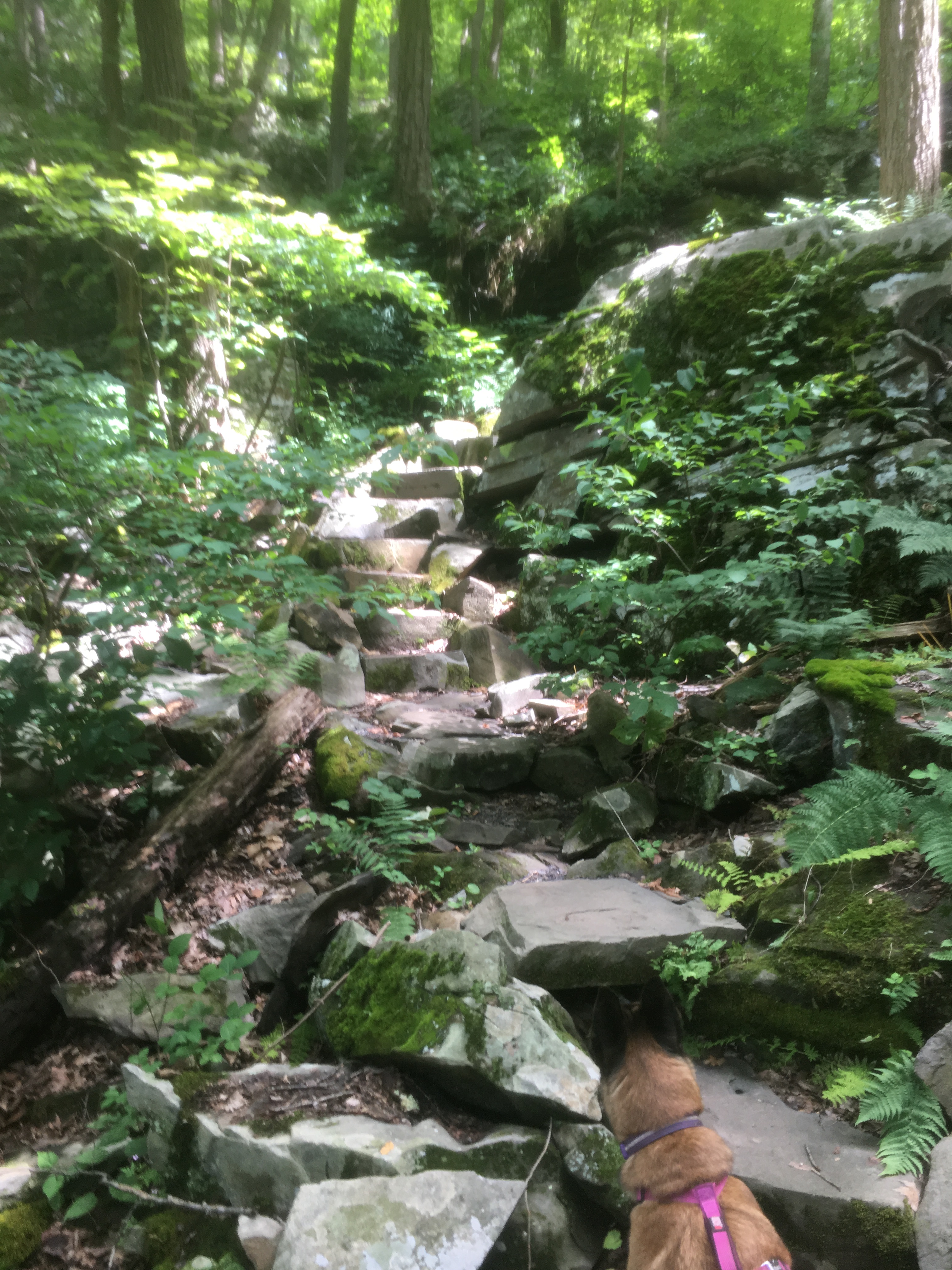
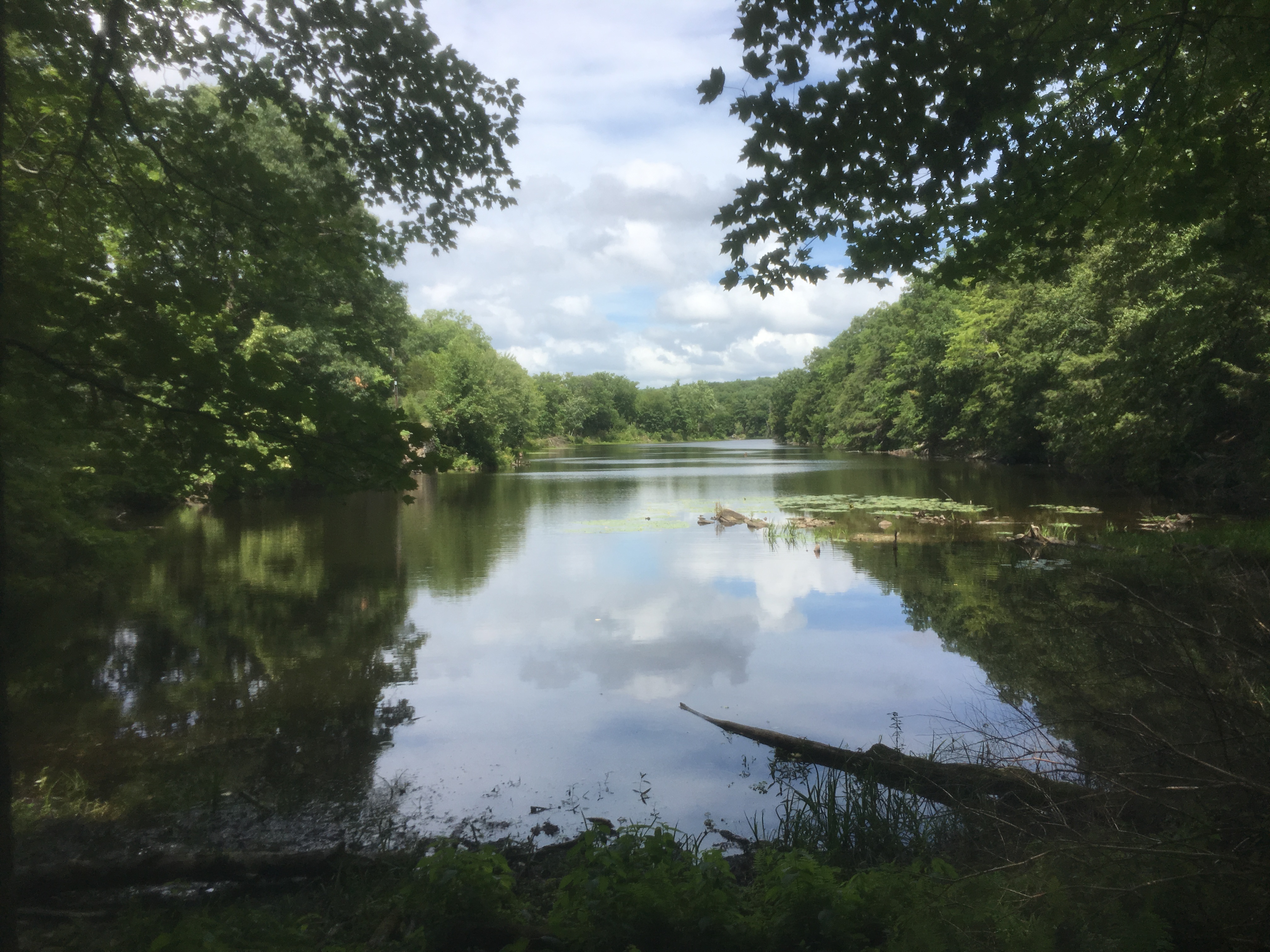
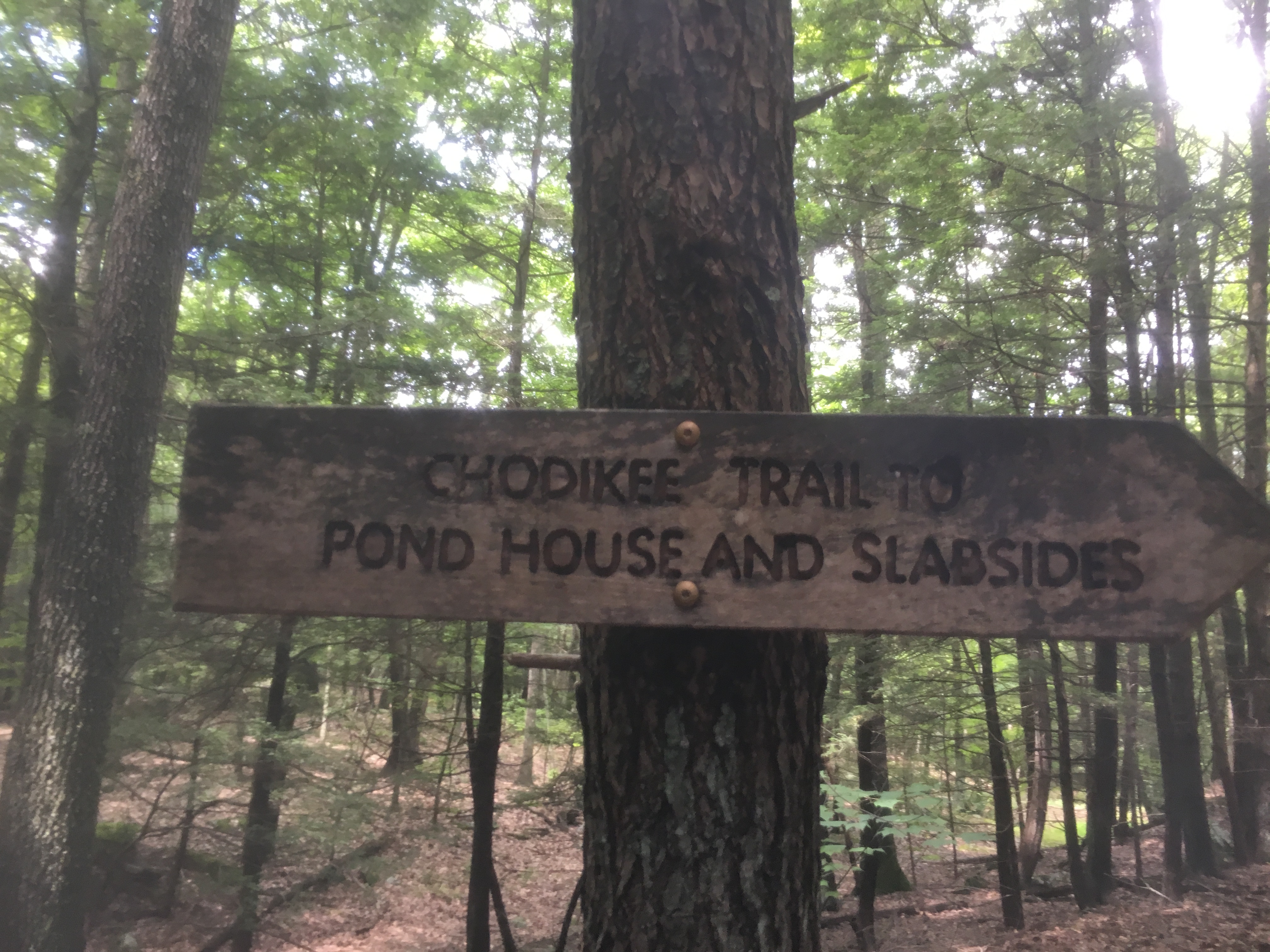
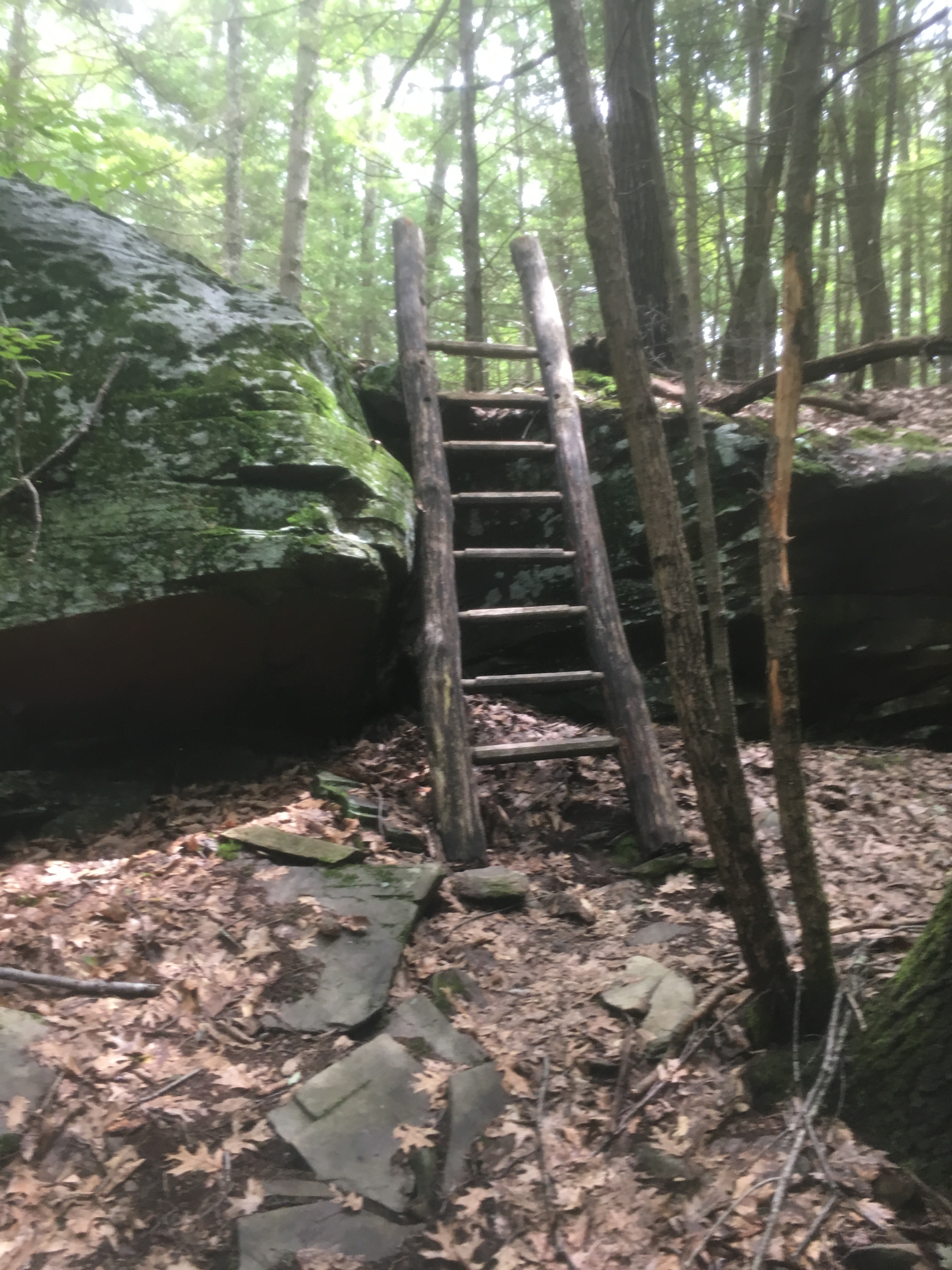
Hiking the John Burroughs Nature Sanctuary (L. Werlau)


Leave a Reply