Feeling invincible after successfully leaping from the Brooklyn in the summer of 1895, Patrick Callahan, the self-proclaimed “King of Bridge-jumping,” set his sights on an even riskier prize – the newly constructed Poughkeepsie Railroad Bridge. Callahan, an Irish immigrant living in New York City, was a twenty-seven year old bartender who had found that he could earn a great deal of cash for daredevil stunts, including bridge-jumping. Prior to jumping from the Brooklyn Bridge, he claimed to have leapt from the Black Friars’ Bridge in London and the Pecos High Bridge in Texas. As his reputation grew, so did the cash payouts, and on July 23, 1895, Callahan jumped from the Brooklyn Bridge, supposedly from a height of about 125 feet. Despite being hospitalized for internal injuries and subsequently arrested, the King declared the jump a success and bragged that he had earned $1700 as a result. (His antics earned him a spot before the Magistrate, where he claimed that he had merely fallen off a dock. With few witnesses to the actual event, he was fined $10 and released.)
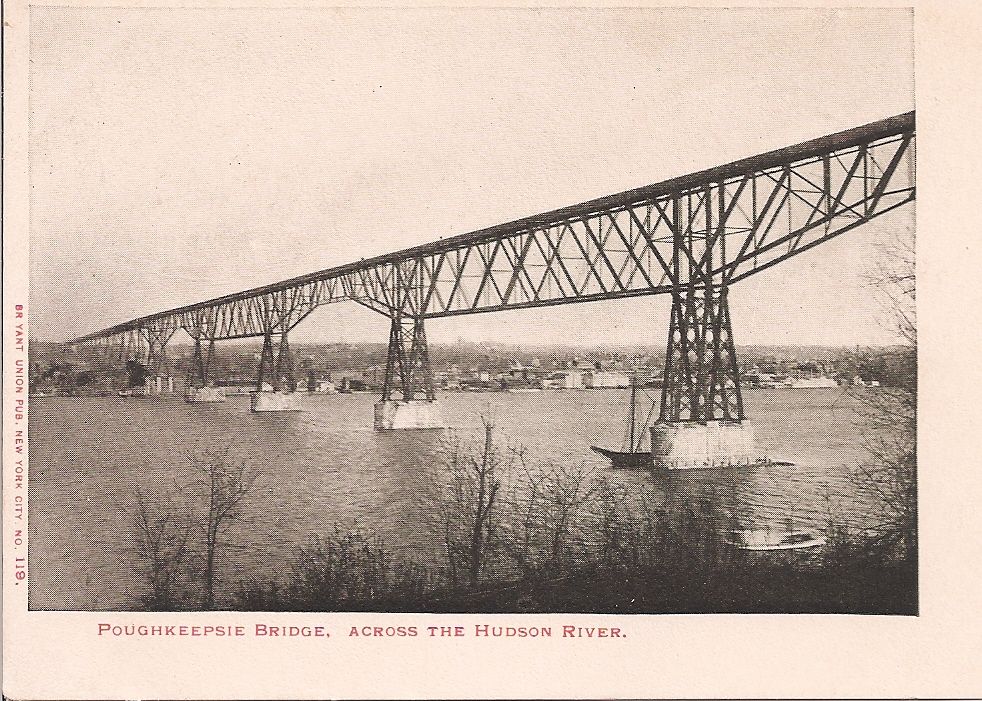
After such success, Callahan set his sights on an even bigger prize – the Poughkeepsie Railroad Bridge, spanning the Hudson River and rising to a height of 212 feet above it. Supposedly, a newspaper in New York City offered him a large sum of money if he were to successfully complete such a jump. Although at least two other men claimed to have already attempted this feat, their assertions had been discounted as scams, with one man only jumping about 30 feet into the water and another thought to have dropped a mannequin into the water rather than actually jumping himself. The offer proved too tempting to resist and, as soon as his injuries healed, Callahan made his way to Poughkeepsie, where he planned his next jump in a hotel room that looked out upon the impressive bridge.
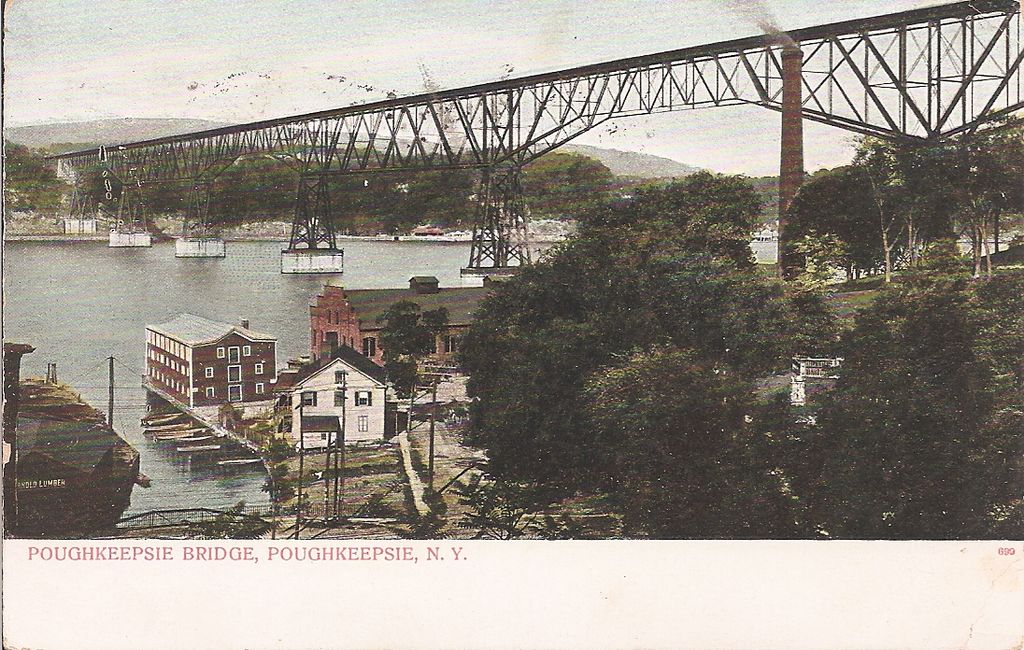
On the morning of October 27, 1895, Callahan prepared for his greatest challenge. He donned his “jumping suit,” an outfit consisting of black pants, long cotton underwear, a blue shirt with inflated cow bladders strapped to the shoulders and a cork life vest. He checked out of his hotel room without paying the bill and, with a contingent that included friends, reporters from the local area and New York City, physicians and the merely curious, Callahan made his way to the bridge around 5 a.m. Most of his companions remained on the east shore, but four of them accompanied him across the span. When stopped by a watchman, the men claimed to be workers on their way to paint a section of the bridge and so were allowed to continue crossing. Callahan took time selecting the perfect perch from which to jump, making sure to avoid the telegraph wires that would impede his mission. He waited nearly an hour for a dense fog to clear so that the reporters on shore would be able to witness the jump. Finally, after shaking hands with his companions, Callahan shouted “Here goes the King!” and, at 6:52 a.m., jumped from a height of nearly 200 feet into the Hudson River.
A correspondent for The New York Times described his plunge as “straight as a plummet line,” though Callahan twisted slightly just before hitting the water. Witnesses waiting in a rowboat for him reported seeing his legs scissor open just before impact, while those on shore nearly 500 feet away described the sound of Callahan’s body striking the water as “[resembling] the boom of a bass drum.” Callahan survived the fall initially, and through a series of groans, was able to call out and joke with the men standing above him on the bridge who inquired about his condition. Rescuers hauled him into a boat and immediately administered doses of brandy and rubbed his body with alcohol in an attempt to ward off shock. It was discovered that Callahan was bleeding from a laceration near his groin, but he downplayed the injury, going so far as to walk on his own upon reaching shore. He was taken to Dean’s Hotel at the Highland Landing and laid on the barroom floor, where he began drifting in and out of consciousness as the wound continued to bleed.
Newspaper reports indicate that “a country doctor” declared the Callahan’s wounds to be minimal, and then departed. Further examination later that day by a team of doctors from Highland and Poughkeepsie revealed a deep laceration from his perineum to his intestines, a weak pulse, and by the end of the day, paralysis from the waist down. Father Gallus Bruder of the Poughkeepsie Church of the Nativity (today the Church of St. Martin de Porres) was called to deliver last rights, but at that Callahan rallied, saying that he felt well enough to try the jump again the following week. To prove his point, he showed that he was already able to move his legs slightly.
Despite his show of strength, at 11:25 p.m., Callahan succumbed to his injuries. His companions, fearing the legal action that could accompany their involvement, were nowhere to be seen, and Callahan died alone, save the presence of hotel proprietor William Dean, his wife, and one other hotel guest. Callahan’s body was removed to Clintondale, where Coroner Hasbrouck conducted an autopsy. Although an inquest was conducted, witnesses were scare and ultimately no charges were filed. After it was determined that death was the result of internal injuries caused by impact with the water, Patrick Callahan, the 27-year old daredevil, was buried in a pauper’s grave in Highland, with none of the fanfare that had briefly marked his reign as the bridge-jumping king.



Leave a Reply