My brother and I were recently going through a box of old currency my mother had saved for many years, a souvenir of her father’s time in Europe during World War II. Our grandfather, Oscar Feldt, of South Street in Plattekill, passed away long before we were born, so we only knew him through the stories told by my mother and other relatives. We knew that he had served overseas in World War II, as a member of the 293rd Engineer Battalion, Company B., Second Platoon, and my mother had saved many mementos from his time in the service in a small box, including letters, tiny bottles of perfume from France and a box of currency from several different countries. As children, she had let us explore the coins and colorful bills collected in his travels, and encouraged us to look up the locations noted on the bills, to determine where one might find lire, or francs, or Rentenmarks.
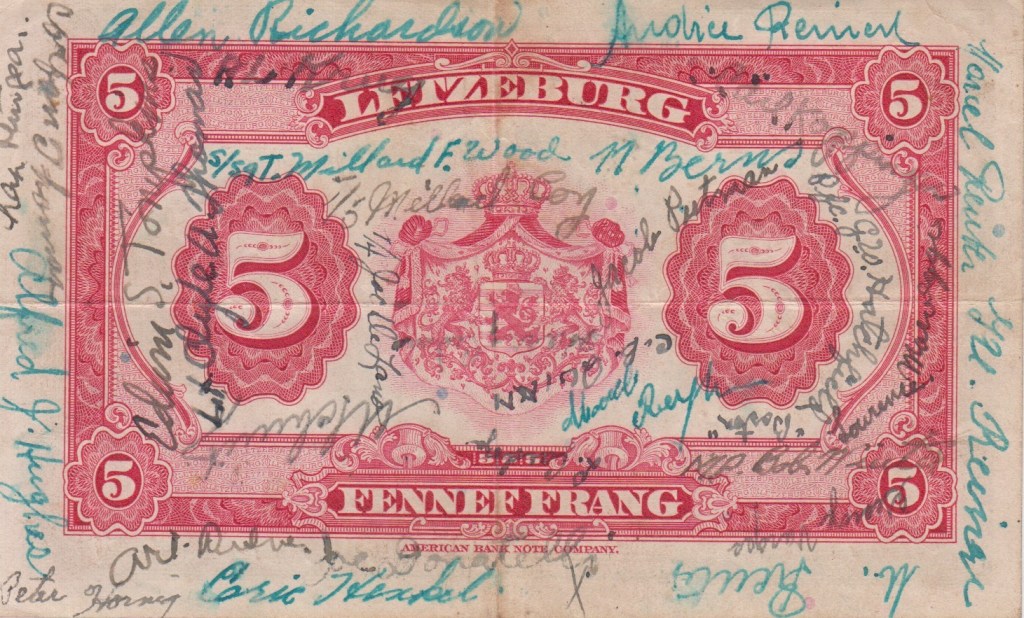
The box of treasures sat forgotten by us for decades until recently. As we rediscovered the box and looked through the currency, we once again noted the countries our grandfather traveled to during his time in the service – France, Italy, Luxembourg, the Netherlands – and wondered about his time in the war. In the midst of this task, my brother happened to note a 1944 Grand-Duche’ de Luxembourg Cinq Franc bill covered with signatures, including one belonging to Oscar’s brother, Martin Feldt of Plattekill, and from a great uncle on my grandmother’s side. We knew from letters our grandfather had sent home from war that he had encountered friends and relatives at different times, but when and where was mostly a mystery, locations kept intentionally vague.
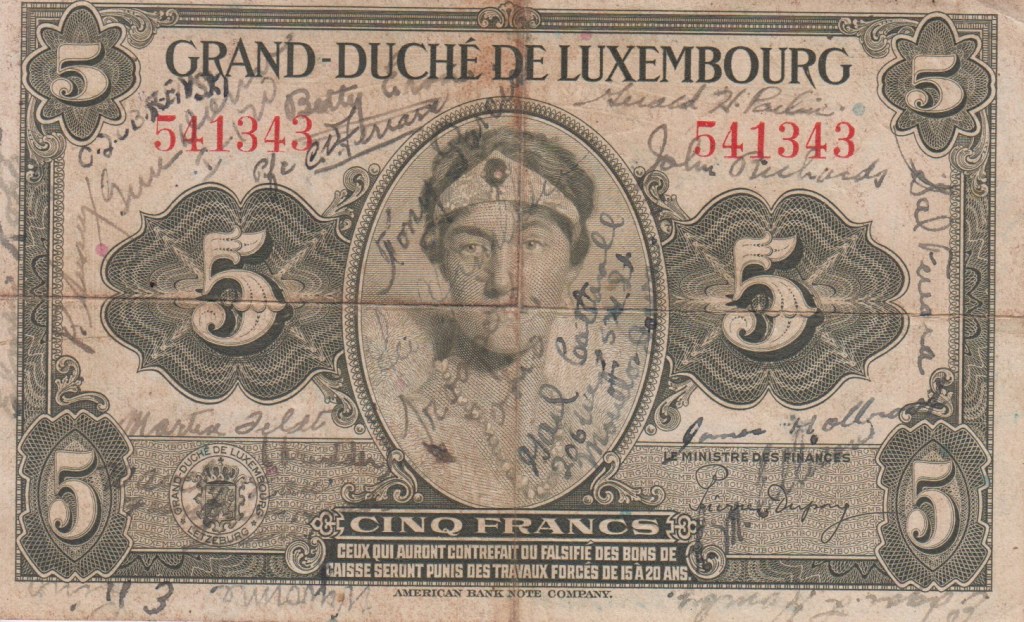
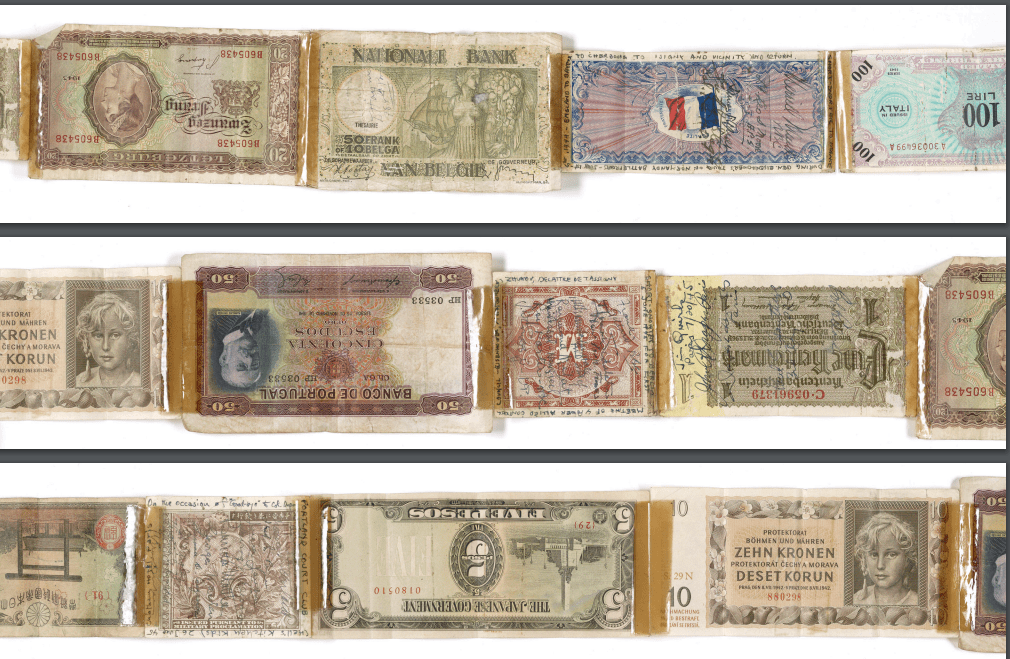
A quick Google search for currency signed by military personnel during World War II led to the National World War II Museum in New Orleans, Louisiana, which houses a collection of banknotes from around the world signed by servicemen and woman, similar to the bill we had found. These bills, we learned, were known as “Short Snorters” and served many purposes – as an autograph book of sorts, a record of survival…and as a drinking game.
So where did the term “Short Snorter” originate? There are several stories surrounding the term’s origin, from Alaskan bush pilots in the 1920s who would sign and swap bills as a form of celebration after safely arriving at their destination in Alaska, to circus aviators who devised a sort of game for conning people out of dollar bills. One source indicates that pilots were known to drink only small amounts, if at all, during layovers, and jokingly came to be referred to as “short-snorters,” while other sources credit the term to antics and pranks performed by barnstormers during Prohibition. They would score points, tallied on the bills, for capers completed and new recruits brought into what became a somewhat exclusive club among pilots.
By the 1940s, the practice had taken hold among American military pilots, who would collect signatures on an American dollar bill to mark their safe arrival after flying over an ocean. Tradition dictated that whomever wound up with the dollar could be called upon by comrades at any point to produce the bill. If they did not have it on their person, they would be obligated to buy a round of small shots – or short snorts – for anyone present.
During World War II, many servicemen and women used the short snorters as a sort of autograph book, collecting signatures from comrades met while stationed in various places. Others pieced together several bills into streamers, using them as a type of scrapbook meant to note the various countries visited. Some even sought out celebrity signatures from those who visited overseas to entertain the troops, and a few celebrities began carrying short-snorters of their own as a result. As this grew in popularity, some currency scrapbooks became legendary, a few even reaching 100 feet or more in length when pieced together. Short-snorters became conversation pieces and a way for those serving to bond over stories. The rules to the drinking games continued to evolve into many variations, such as requiring the person with the fewest number of signatures on their short snorter to buy the next round.
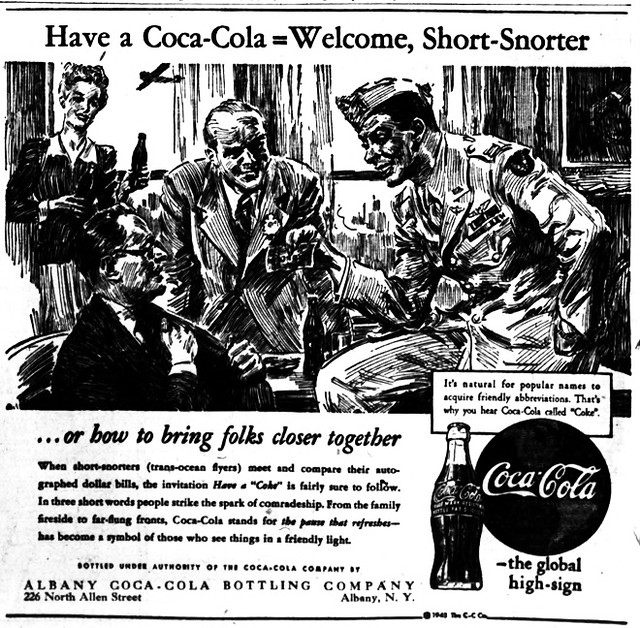
And for those who didn’t drink alcohol? Some milder game rules suggested that anyone caught without his or her signed bill would owe all in company a dollar. Coca-Cola cashed in on the craze and developed ads encouraging servicemen and women to share their short-snorters over a nice cold bottle of soda.
On a more serious note, the short-snorters were often used to mark major events, such as surviving a battle or escaping safely from behind enemy lines. There are stories of those captured and held in POW camps using their signed bills to call up memories of happier times, and others who held on to the German bills issued in camps in the hopes that the entire group imprisoned there would sign the bills for each other upon their release.
Of all the bills from various countries my grandfather held on to, was there significance in him using the Luxenbourg currency for his short snorter? A copy of his Honorable Discharge record on file in the Ulster County Clerk’s Office (https://clerk.ulstercountyny.gov/archives) notes that among the battles and campaigns in which he served was the Ardennes Offensive, also known as The Battle of the Bulge, from December 1944 to January 1945. Fighting took place in the forests of Ardennes, between Belgium and Luxembourg. Was his bill signed by others in celebration for surviving the largest single battle in World War II? Sadly, those who might have been able to answer that question are long gone, but they left behind a treasure in the form of their names on this bill, an invitation to learn more about their stories.
In short, these Short Snorter bills allowed those far from their homes to make new friends, share laughs and companionship amidst the horrors of war, and record a timeline of their service. They were a way to bring together Americans serving around the world, and today they live on as a small window into the stories of those who served so selflessly.



Leave a Reply