Of all the town of Plattekill hamlets, the early history of Clintondale is the most documented, thanks to the efforts of several historians. The earliest known written history of the hamlet is courtesy of P.N. Mitchell, a teacher and later the principal at the Clintondale School. Mitchell wrote and sold copies of his “History of the Village of Clintondale, Ulster County, N.Y: The First Settlement to 1894” to raise funds for the construction of the Clintondale Methodist Episcopal Church. The booklet sold for 25 cents. Mitchell’s history is comprehensive, with detailed descriptions of the streets, buildings, businesses and prominent residents of the hamlet. A distinctive feature is Mitchell’s poetic language and attempts to name many of the streets in Clintondale based on the natural features in the area.
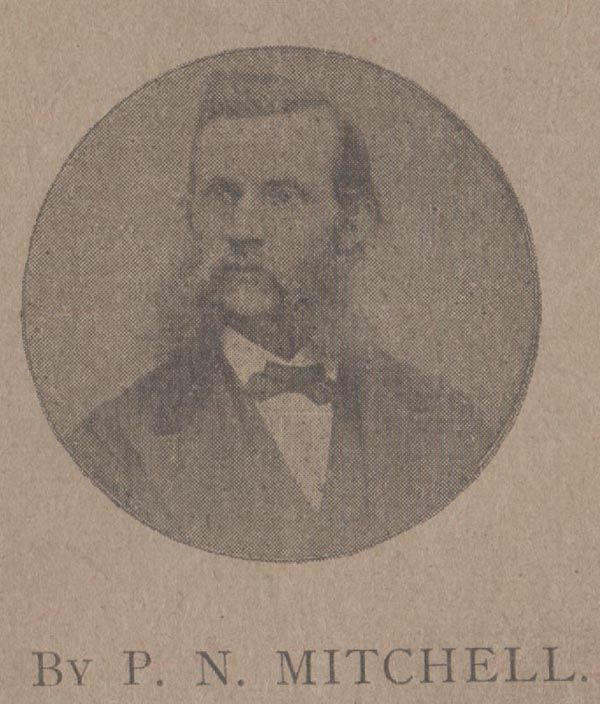
“In the extreme north and well to the east of the Town of Plattekill, Ulster County, New York, and lying partly within the south-west tongue of the Town of Lloyd, is the pretty little Village of Clinotndale. Bowered in vineyards and in orchards of peach, cherry, apple and other fruits, and surrounded also by abundant fields of straw, black and raspberry and by acres of currents, the chief resource of the place is clearly seen to be horticultural. Its neat cottages, well kept lawns, busy stores and pretty public buildings, tell a story of industry and sobriety, characteristic of the population as a whole, so plain that “he who runs may read” (7).
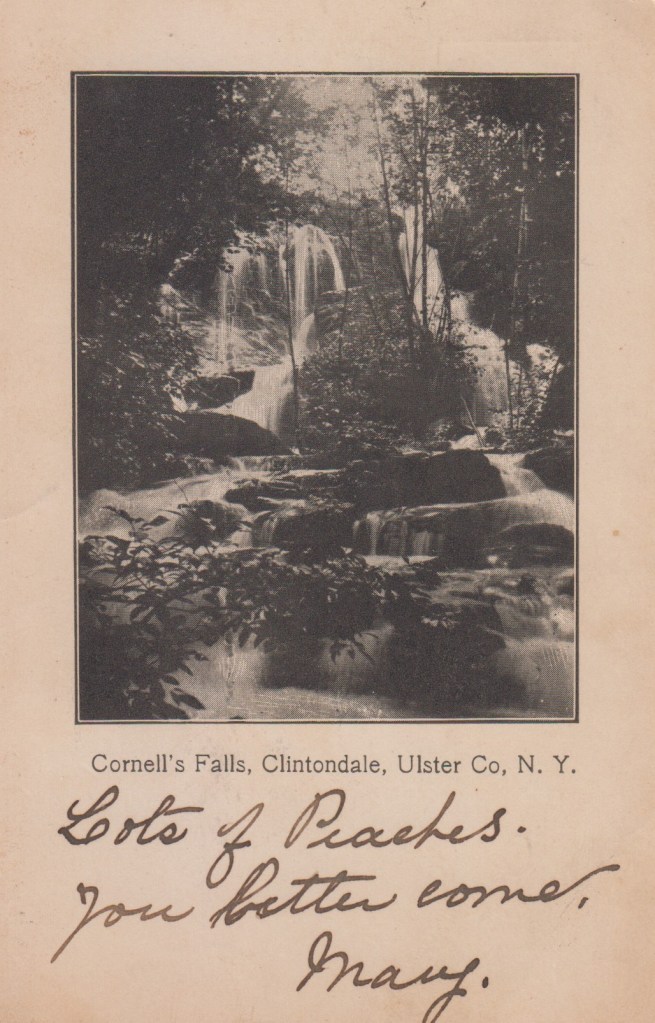
For example, today’s Crow Hill Road was called “Cascade Avenue,” for the waterfall present at the base of the street. Hurd’s Road, known to most at the time as “the Paltz Road,” was “Vesper Avenue” for its westward direction toward the setting sun. Other nature-influenced names included “Meadow Hill Lane” (today’s Palazzo Lane), Shady Dell Lane, Mountain Lane and Crest Lane.
In 1918, Marguerite Terhune contributed another booklet, called simply “History of Clintondale.” This history, mostly transcribed word for word from the Mitchell history, offers some updates in terms of numbers and names of residents and businesses.
Historians Jerome and Elizabeth Hurd and Ralph and Alice Van Siclen also relied heavily on Mitchell in their 1959 “The Village of Clintondale from its beginning to 1959,” but with significant updates. They continued the list of Clintondale School Trustees and Teachers begun by Mitchell, recorded lists of ministers in the local churches and added detailed information on Clintondale organizations inlcuding the Grange, the Women’s Christian Temperance Union (W.T.C.U), 4-H, Scouts and the volunteer Allied Communities Fire Company. Also included is information on residents who served during World Wars I and II.
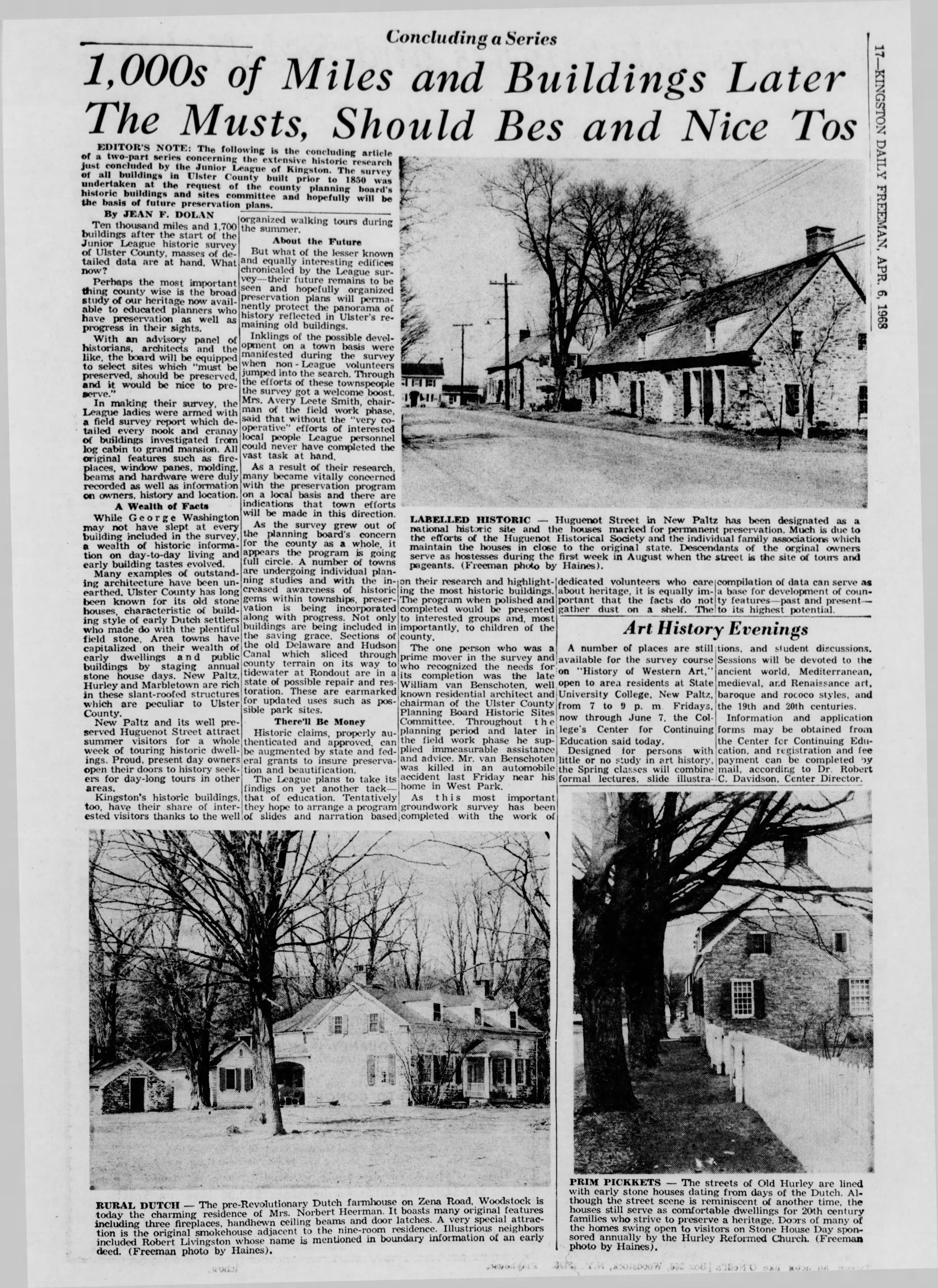
Elizabeth “Betty” Hurd continued documenting the history of the hamlet and in 1969 contributed to an extensive project sponsored by the Junior League of Kingston. At the request of the Ulster County Planning Board, Junior League members and a contingent of volunteers surveyed as many Ulster County buildings constructed prior to 1850 as they could find. Nearly 2000 buildings were included in the final effort, including many in the town of Plattekill. Hurd photographed and researched the pre-1850 homes in Clintondale, and then went on to photograph most of the homes in the hamlet, going house by house and adding notes on current and past owners. Her collection has proved invaluable to later researchers. Currently her original photographs and negatives are part of the Plattekill Historic Preservation Society’s archives.
The late historian Shirley V. Anson continued documenting Clintondale history in both her Quaker History and Genealogy of the Marlborough Meeting (co-authored with Laura Jenkins and Janice Maynard) and Friends and Neighbors: A Pictorial History of the Town of Plattekill and Southwest Lloyd, Ulster Co., NY, a project to benefit the Clintondale Friends Church.
These contributions over time have helped to create a detailed view of the tiny hamlet that straddles two towns, calling back memories of the many people, organizations and stories that helped to shape the town of Plattekill.


Leave a Reply